
China’s 15th Five-Year Plan Sets a New Direction for Building a Sports Power
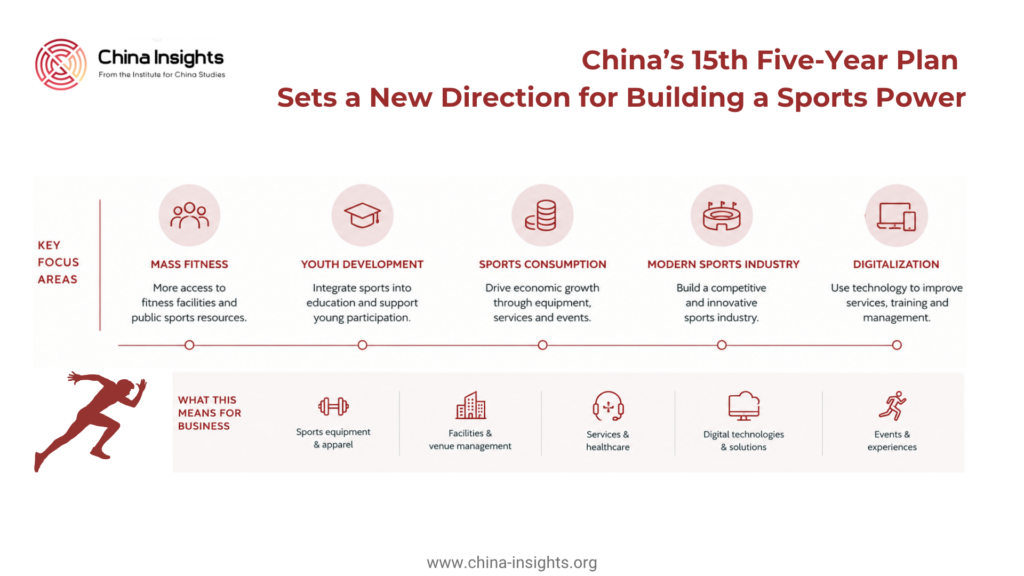
China is positioning sports as a broader contributor to economic development, public health and social participation during the 15th Five-Year Plan period (2026–2030). The policy direction goes beyond traditional competitive sports and places greater emphasis on mass participation, youth development, sports consumption and the development of a modern sports industry.
The State Council Information Office (SCIO) held a press conference on 3 September 2026 to explain the implementation priorities for building China into a leading sports nation during the 15th Five-Year Plan. Officials from the General Administration of Sport of China (GASC) outlined the main objectives and measures for the next five years.
The announcement provides an important indication of how China intends to develop its sports sector. The focus is increasingly on integrating sports into wider economic, social and health-policy objectives.
Executive summary
- China is broadening its sports development strategy beyond elite and competitive performance.
- Mass fitness, youth sports and sports participation are becoming more prominent policy priorities.
- Sports consumption and the sports industry are expected to contribute more directly to domestic economic growth.
- Public sports infrastructure and access to fitness facilities will remain important areas of investment.
- Digital technologies are becoming increasingly relevant to sports services, training and management.
- The policy creates opportunities for companies operating across sports equipment, facilities, services, healthcare and digital technologies.
- Sports development is increasingly linked to national health, social development and the expansion of domestic consumption.
From competitive sports to a broader sports economy
The most significant change is the broader definition of sports development. While competitive sports and international performance remain important, the 15th Five-Year Plan places greater emphasis on the role of sports in everyday life.
The policy agenda links sports with public health, quality of life and social participation. This reflects China’s broader objective of improving the population’s health and supporting more active lifestyles.
For businesses, this expands the addressable market beyond professional sports. Opportunities are likely to emerge across recreational fitness, sports services, equipment, venues, health management and related consumer products.
Mass fitness becomes a central policy priority
Mass participation in sports is receiving greater attention during the new planning period. The government is seeking to improve access to fitness activities and strengthen the availability of public sports facilities.
This represents a shift from infrastructure designed primarily for major sporting events toward facilities that support regular community use. Local governments are expected to play an important role in expanding access and improving the utilization of existing resources.
The commercial implications are significant. Demand for fitness equipment, sports services, facility management and digital fitness solutions could benefit from wider participation.
Youth sports receives greater emphasis
Youth development is another important element of the 15th Five-Year Plan sports agenda. The government is placing greater importance on integrating physical activity into education and supporting the development of sports participation among young people.
The focus is not limited to identifying elite athletes. It also includes improving physical fitness and encouraging long-term participation in sports.
This creates potential opportunities for companies providing youth sports training, equipment, facility development and educational services. It also reinforces the connection between sports policy and China’s broader education and public-health objectives.
Sports consumption becomes an economic driver
China’s sports industry is increasingly being positioned as part of the domestic consumption economy. Greater participation in sports creates demand for equipment, apparel, services, events and recreational activities.
The 15th Five-Year Plan approach suggests that sports consumption will become more closely linked to the expansion of household services and lifestyle-related spending.
For companies, this means the sports market should not be viewed solely through the lens of public-sector infrastructure. Consumer demand and service innovation will become increasingly important sources of growth.
Digitalization changes the sports business model
Digital technology is becoming more relevant across the sports sector. Online fitness platforms, smart equipment, wearable devices and data-driven training systems are changing how individuals access and manage physical activity.
The broader digitalization of the Chinese economy also supports the integration of sports with health data, intelligent equipment and personalized services.
For technology companies, this creates opportunities at the intersection of sports, healthcare and digital consumer services. However, market development will depend on consumer adoption, data management and the ability to integrate technology into practical fitness and sports applications.
Infrastructure investment remains important
Public sports facilities remain a key part of China’s sports development strategy. The emphasis is increasingly on improving the accessibility and quality of facilities rather than simply increasing their number.
This includes the upgrading of existing infrastructure and the development of community-level sports facilities. Local implementation will determine the scale and commercial structure of many projects.
For foreign and domestic suppliers, the market includes construction, facility equipment, maintenance, intelligent management and sports-related services. Opportunities will vary significantly by region and local government investment priorities.
Greater integration with public health
Sports policy is becoming increasingly connected to national health objectives. Regular physical activity is being promoted as part of a broader strategy to improve population health and reduce the burden associated with sedentary lifestyles.
This creates a stronger institutional connection between the sports industry, healthcare providers and wellness services.
Companies operating in fitness, preventive health, rehabilitation and sports medicine may benefit from this convergence. The distinction between sports consumption and health-related services is likely to become less clear.
Implications for international companies
China’s sports market is becoming more diversified. Traditional opportunities in equipment manufacturing and professional sports remain relevant, but the strongest growth potential may increasingly come from mass participation and consumer services.
International companies entering the market will need to understand the distinction between public-sector procurement, commercial fitness services and consumer-oriented sports products.
Local partnerships, regional market knowledge and compliance with Chinese standards will remain important. Digitalization and the integration of sports with health services may also require companies to address additional regulatory considerations.
What this means for business
- Expand market definitions: Sports opportunities extend beyond professional competition into fitness, wellness, education and consumer services.
- Monitor mass-participation trends: Community fitness and recreational sports are becoming important growth areas.
- Assess youth-related opportunities: Education-linked sports services and equipment may benefit from stronger policy support.
- Explore digital integration: Smart equipment, fitness platforms and data-driven services are increasingly relevant.
- Track local infrastructure projects: Regional governments will play a major role in determining investment opportunities.
- Consider cross-sector partnerships: Sports, healthcare, education and consumer services are becoming increasingly interconnected.
Source
https://www.gov.cn/zhengce/202609/content_7080143.htm
Author
Dr. Richard van Ostende

Related Articles