
Strengthening High-Power Charging Infrastructure: China Targets Electric Vehicle Charging Bottlenecks on Highways
China’s rapid expansion of the electric vehicle (EV) market has transformed the country into the world’s largest market for new energy vehicles. With millions of electric cars now on Chinese roads, attention is increasingly turning toward the infrastructure required to support long-distance travel and large-scale EV adoption. One of the most visible challenges emerging from this transition is the availability and performance of charging infrastructure along highways.
In response to growing demand, China’s Ministry of Transport announced plans to strengthen high-power charging infrastructure at highway service areas. According to a policy interpretation published on the Chinese Government website, the ministry will focus on improving charging capacity and expanding high-power charging facilities to address common issues such as difficulty finding charging stations and long waiting times.
The initiative reflects China’s broader effort to align transportation infrastructure with the rapid electrification of the automotive sector. While charging infrastructure has expanded significantly in recent years, the continued growth of EV ownership has created new operational challenges. The government’s latest policy signals that improving charging efficiency and infrastructure capacity will be a key priority for the next phase of China’s transport modernization.
For international businesses operating in China, this means the Ministry of Transport’s push to expand high-power charging infrastructure signals a maturing electric mobility ecosystem where opportunities are emerging across charging equipment, battery technology, grid infrastructure, and digital energy management. Companies that can support faster, smarter, and more efficient charging networks are well-positioned to benefit as improved infrastructure drives stronger consumer confidence and continued EV adoption.
Executive Summary
- The Ministry of Transport announced new efforts to expand high-power charging capacity at highway service areas in order to address EV charging bottlenecks.
- Authorities aim to address common problems faced by EV drivers, including difficulty locating charging stations and long waiting times.
- According to government data, charging facilities are already installed at 98.8% of highway service areas across China, but additional upgrades are required to support increasing EV traffic.
- The focus will be on high-power and fast-charging technologies, which can significantly reduce charging times and improve infrastructure efficiency.
- The initiative forms part of China’s broader strategy to support the growth of new energy vehicles and sustainable transport infrastructure.
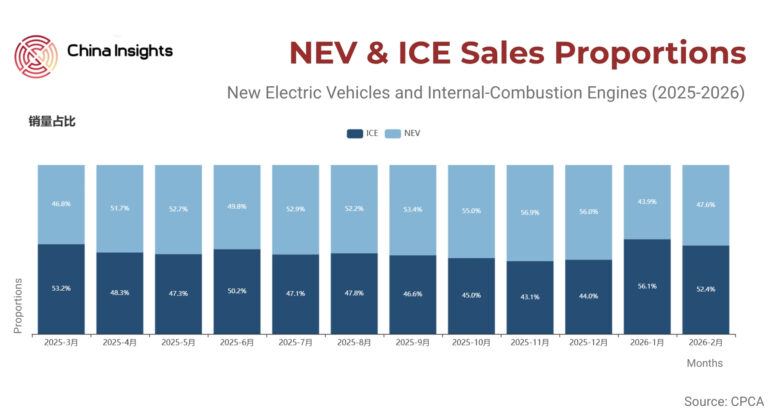

The Rapid Expansion of Electric Vehicles in China
China’s electric vehicle industry has experienced extraordinary growth over the past decade. Government policies promoting new energy vehicles, combined with technological innovation and strong domestic manufacturing capabilities, have transformed the country into a global leader in EV production and adoption.
The increasing number of electric vehicles on the road has significantly increased demand for charging infrastructure. This demand is particularly visible during peak travel periods, such as national holidays, when EV drivers frequently rely on highway charging stations for long-distance travel.
As the number of EVs continues to grow, the pressure on existing infrastructure has become more pronounced. Drivers often report challenges locating available charging stations and long waiting times at service areas, particularly along busy transport corridors.
Charging Infrastructure Coverage on China’s Highways
China has made substantial progress in deploying charging infrastructure along major transport routes. According to the Ministry of Transport, charging facilities are now available at 98.8% of highway service areas across the country.
This high level of coverage reflects large-scale investment in transportation infrastructure and reflects the government’s commitment to supporting electric mobility. However, coverage alone does not necessarily guarantee sufficient capacity.
In practice, many service areas have a limited number of charging points relative to the growing number of EVs using the highway network. As a result, drivers may still experience congestion at charging stations during peak travel periods.
Addressing these capacity constraints has therefore become a key focus of transportation policy.
The Shift Toward High-Power Charging Technology
To improve charging efficiency, Chinese authorities are increasingly emphasizing the deployment of high-power charging systems, often referred to as fast-charging or ultra-fast charging infrastructure.
These systems allow electric vehicles to recharge significantly faster than conventional charging equipment. Faster charging reduces the time required per vehicle, allowing more vehicles to use the same infrastructure within a given period.
According to statements made by Transport Minister Liu Wei during the Second “Ministers’ Corridor” session of the Fourth Session of the 14th National People’s Congress on 9 March 2026, China will prioritize the development of high-power charging capabilities to alleviate the challenges of finding available chargers and waiting in long queues.
The shift toward high-power charging therefore represents a technological solution to infrastructure congestion rather than simply expanding the number of charging points.
Infrastructure Challenges Behind Charging Congestion
Although China has built one of the world’s largest charging networks, several structural factors contribute to charging congestion at highway service areas.
The growth of EV ownership has been extremely rapid. Infrastructure expansion often struggles to keep pace with the speed at which new vehicles enter the market.
Charging behavior is highly concentrated during peak travel periods. During major holidays such as the Spring Festival or National Day, large numbers of vehicles travel simultaneously across the highway network, creating temporary spikes in charging demand.
Charging times remain longer than traditional refueling for gasoline vehicles. Even with fast-charging technologies, EV charging typically requires significantly more time than refueling with conventional fuels.
Certain service areas face physical constraints related to land availability, grid capacity, and electrical infrastructure. Expanding charging capacity often requires upgrades to local power networks and additional investment in grid infrastructure.
Integration with China’s Transport Modernization Strategy
The initiative to expand high-power charging infrastructure forms part of China’s broader transport modernization strategy. The government has been investing heavily in what it calls a “comprehensive national transportation network”, integrating highways, railways, ports, and aviation infrastructure.
Electric mobility is increasingly seen as an integral component of this system. Supporting EV adoption not only contributes to environmental goals but also aligns with China’s industrial strategy to strengthen the competitiveness of domestic EV manufacturers.
Transportation infrastructure planning is therefore increasingly coordinated with energy policy, urban development, and industrial policy. The expansion of charging infrastructure along highways reflects this integrated policy approach.
Supporting the Growth of the New Energy Vehicle Ecosystem
China’s EV policy is not limited to vehicle manufacturing. Authorities are also focusing on building a comprehensive ecosystem that supports the widespread adoption of electric mobility.
This ecosystem includes charging networks, battery technology development, grid integration systems, and smart energy management solutions. High-power charging infrastructure represents a critical component of this ecosystem because it enables EVs to function effectively for long-distance travel.
The ability to travel long distances without significant delays is an important factor influencing consumer confidence in electric vehicles. By improving highway charging infrastructure, policymakers aim to reduce so-called “charging anxiety” and encourage broader adoption of EVs.

The Role of Technology and Innovation
Technological innovation will play an important role in addressing charging infrastructure challenges. Advances in battery technology, charging equipment, and energy management systems could significantly improve charging efficiency.
High-power charging technologies are capable of delivering significantly higher charging speeds compared with traditional chargers. In some cases, these systems can provide substantial battery capacity within minutes rather than hours.
In addition, digital technologies can improve the management of charging infrastructure. Smart platforms can help drivers locate available chargers, manage reservations, and optimize charging schedules to reduce congestion.
Such innovations may further enhance the effectiveness of China’s expanding charging network.
What This Means for Business
The Ministry of Transport’s focus on improving high-power charging infrastructure has several implications for businesses operating in China’s transportation, energy, and automotive sectors.
Companies involved in charging infrastructure development may benefit from increased investment in high-power charging technology. This includes manufacturers of charging equipment, grid infrastructure providers, and operators of charging networks.
The initiative creates opportunities for companies specializing in battery technology and fast-charging systems, as demand for faster charging solutions continues to grow.
Infrastructure expansion may benefit automotive manufacturers, particularly those focused on electric vehicles. Improved charging infrastructure can strengthen consumer confidence in EVs and support continued growth in EV adoption.
Companies involved in energy management, digital platforms, and smart mobility services may find new opportunities in supporting the operation and optimization of charging networks.
Overall, the policy signals that China is entering a new stage in the development of its electric mobility ecosystem, one that focuses not only on expanding infrastructure coverage but also on improving charging speed, efficiency, and user experience.
Sources
Policy interpretation: “The Ministry of Transport will enhance high-power charging capacity and strive to alleviate the problems of ‘difficulty finding charging stations’ and ‘long queues’”
China News Service – Minister of Transport: Efforts to alleviate highway charging problems https://www.chinanews.com.cn/gn/2026/03-09/10583834.shtml
Xinhua / China Economic Net – Charging facilities coverage reaches 98.8% of highway service areas https://www.ce.cn/xwzx/gnsz/gdxw/202603/t20260309_2815107.shtml
Chinese Government Website – Transport policy interpretation
Author
Dr. Richard van Ostende

Related Articles